Rat Control in Augusta — Why Local Knowledge Matters
Augusta supports two distinct rat species that demand completely different treatment approaches, and they often co-exist within a few blocks of each other. Norway rats (Rattus norvegicus) dominate the Savannah River waterfront, the Augusta Canal industrial corridor, downtown restaurant zones along Broad Street and 5th Street, and any structure with basement or sewer access. They burrow, they're heavy-bodied, and they live at ground level or below.
Roof rats (Rattus rattus) are a different problem entirely. Augusta's mature live-oak canopy — particularly in Summerville, Forest Hills, Highland Park, Lake Aumond, and Pepperidge — creates overhead pathways that connect tree to roofline to attic without touching the ground. Roof rats travel these canopy highways and exploit the soffit vents, roofline gaps, and uncapped penetrations common in Augusta's older housing stock.
Treating a roof-rat attic infestation with ground-level Norway-rat bait stations is wasted time and money. Treating a Norway-rat basement infestation by sealing soffit vents accomplishes nothing. Species identification on the first visit is not optional — it determines everything that follows.
Augusta's humidity factor: Unlike pest companies in cooler markets, we cannot count on winter to kill off outdoor rat populations and reduce pressure. Augusta's humid subtropical climate supports year-round rat breeding, which means structural gaps that would be low-risk in January in Atlanta are high-risk in January in Augusta. Exclusion work here needs to be thorough and permanent.
What's Included in Our Rat Control Service
- Full property inspection — attic, crawl space, exterior perimeter
- Species identification (Norway vs. roof rat)
- Entry-point mapping with photo documentation
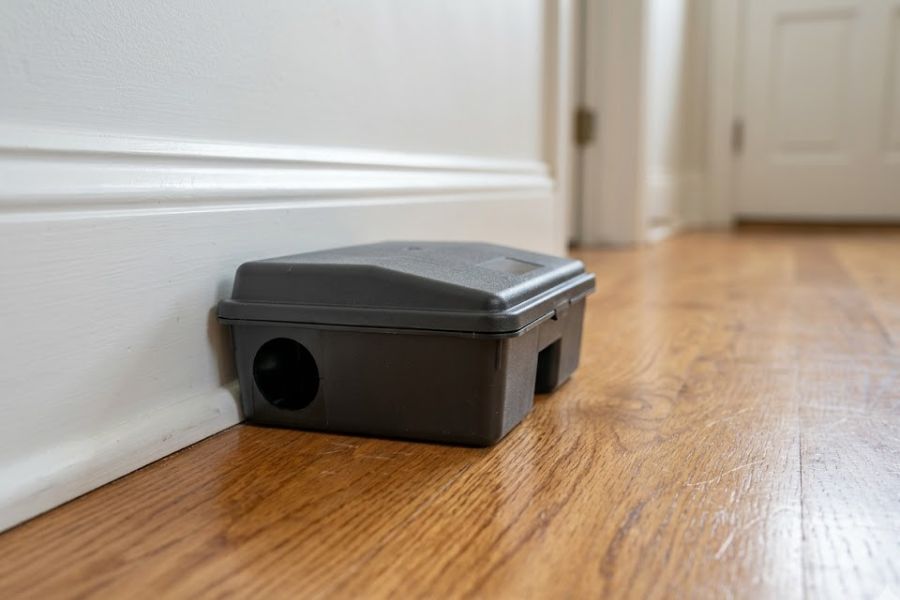
- Tamper-resistant bait station placement
- Snap-trap and glue-board deployment as appropriate
- Exclusion sealing of confirmed entry points
- Follow-up verification that colony is eliminated
- Recommendations for long-term prevention
- Same-day service available
- 24/7 emergency response
Our Four-Step Rat Control Process
Inspect
Full walkthrough of attic, crawl space, exterior foundation, roofline, and all utility penetrations. We look where rats live, not where they're merely visible.
Identify
Species confirmation — Norway rat, roof rat, or both. Activity level assessment. Entry-point mapping with photographs.
Treat
Targeted baiting, trapping, and removal appropriate to the confirmed species and infestation severity.
Exclude
Permanent sealing of all confirmed entry points with steel wool, hardware cloth, caulk, and expanding foam rated for permanent rodent exclusion.
Norway Rat vs. Roof Rat — Augusta's Two Rat Species
| Characteristic | Norway Rat | Roof Rat |
|---|---|---|
| Body size | 7–10 inches body; heavy, blunt nose | 6–8 inches body; sleek, pointed nose |
| Where they live | Ground level — burrows, basements, sewers, lower wall voids | Elevated — attics, soffits, upper wall voids, tree canopies |
| Entry points | Foundation gaps ≥½ inch, garage doors, utility pipes | Soffit vents, roofline gaps, tree-branch contact points |
| Augusta neighborhoods | Downtown, Savannah River corridor, Augusta Canal zone, West Augusta | Summerville, Forest Hills, Highland Park, Lake Aumond, Pepperidge |
| Signs | Burrow holes near foundation, droppings in basement or kitchen | Attic noise at night, droppings in upper cabinets, soffit damage |
| Primary treatment | Ground-level bait stations + foundation exclusion | Attic trapping + roofline exclusion + tree trimming |
Rat Control Across Augusta's Neighborhoods
Every Augusta neighborhood presents a different rat profile, shaped by housing age, canopy cover, proximity to the Savannah River, and proximity to commercial activity. Some specific contexts we handle regularly:
Downtown & restaurant districts: The Broad Street and 5th Street restaurant corridor generates sustained Norway rat pressure. Dumpster access, shared basement walls, and active grease-trap smells create harborage conditions that feed the surrounding residential blocks. We work with both restaurant operators and adjacent homeowners.
Summerville and Walton Way corridor: Augusta's most tree-canopied neighborhood has the highest roof-rat attic pressure in Richmond County. Heritage homes from the late 19th and early 20th centuries have soffit gaps, open ridgelines, and original foundation venting that modern exclusion methods have to work around carefully. We specialize in exclusion approaches compatible with historic structure preservation requirements.
Harrisburg and Olde Town: Pre-1900s construction with brick-pier foundations and original crawl spaces. Norway rats exploit pier gaps and below-grade openings that have never been properly sealed. These jobs require patient entry-point mapping and masonry-compatible sealing materials.
Commercial corridors — Washington Road, Gordon Highway, Bobby Jones: Strip retail, fast food, self-storage, and light industrial properties generate consistent Norway rat pressure. We provide commercial bait-station programs with documentation suitable for health department review.
Trusted CSRA Rodent Specialists
Norway rat or roof rat — we identify the species on the first visit and build the treatment around what's actually present. Call now for same-day inspection availability.
📞 Call (844) 635-0403Rat Control Pricing in Augusta
Honest ranges, not bait-and-switch minimums:
- Inspection only: $150–$250. Full written report with photo documentation and entry-point map.
- Basic removal visit (trapping + baiting): $250–$400. Appropriate for low-severity infestations with known entry points already sealed.
- Complete rat control (removal + exclusion): $500–$1,500 depending on property size, number of entry points, and species involved. This is the scope that produces durable results.
- Attic cleanup + insulation replacement: Quoted separately on-site after infestation is resolved. Ranges from $800–$4,000+ depending on attic size and contamination extent.
We do not offer flat-rate packages because rat jobs vary too significantly by property to price honestly that way. Every quote is generated after an on-site inspection.
Augusta Neighborhoods We Serve for Rat Control
- Downtown
- Summerville
- Olde Town
- Harrisburg
- West Augusta
- Southside
- Forest Hills
- Highland Park
- Lake Aumond
- Sand Hills
- Martinez
- National Hills
- Evans, GA
- Grovetown, GA
- North Augusta, SC
- Aiken, SC
- Hephzibah, GA
- Waynesboro, GA
Not listed? Call (844) 635-0403 — we serve all 39 areas across the CSRA.
Rat Activity Across Augusta's Four Seasons
Rats don't follow the same yearly rhythm in Augusta that they do further north. The CSRA's mild winters and humid summers create a year-round pressure profile that requires different tactical responses depending on the month. Understanding these patterns helps explain why one homeowner sees a sudden infestation in September while a neighbor reports their first activity in March.
Spring (March–May): Outdoor rat populations expand rapidly as breeding accelerates. Norway rats establish new burrow systems along drainage lines, retaining walls, and the perimeter of properties bordering the Augusta Canal and Phinizy Swamp areas. This is when prevention treatments are most cost-effective — addressing exterior pressure before it migrates indoors. Property managers in Summerville and Olde Town typically schedule perimeter bait stations during this window.
Summer (June–August): The hottest months drive roof rats higher into Augusta's tree canopy and onto rooflines, particularly in neighborhoods with mature pecan, magnolia, and oak coverage — Forest Hills, National Hills, and the older sections of Harrisburg. Indoor activity often appears as attic noise. Norway rats remain ground-level, exploiting irrigation systems and the moisture available under raised foundations common in pre-1970 housing.
Fall (September–November): The single highest-pressure season for new indoor infestations. As outdoor food sources contract and overnight temperatures drop into the 50s, rats actively seek interior harborage. The fall surge typically begins around the third week of September and continues through Thanksgiving. Most of the "I'm hearing scratching in the walls" calls we receive in a calendar year happen during these ten weeks.
Winter (December–February): Augusta's mildest months by national standards but still cold enough to keep established colonies indoors. Indoor breeding continues at full pace. Outdoor activity slows but doesn't stop — bait stations remain active throughout winter, particularly near commercial properties on Washington Road and Wrightsboro Road where dumpster proximity creates year-round pressure.
One-Time Rat Control vs. Ongoing Program — Which You Actually Need
The most common decision Augusta property owners face when they call us is whether their situation warrants a one-time treatment or an ongoing program. The answer depends less on infestation size than on the conditions producing the infestation. A property with no structural entry points and no exterior harborage rarely needs ongoing service after a one-time resolution. A property with chronic conditions — adjacent vacant lots, dense landscaping against the foundation, proximity to commercial dumpsters — almost always benefits from quarterly maintenance.
Decision framework: Choose ongoing rat control if any of the following apply — your property borders undeveloped land, you've had two or more rat infestations in the past three years, you own rental property where tenant behavior is outside your control, you operate a food-handling business, or your home was built before 1970 with original crawl-space venting. Otherwise, one-time complete rat control with verified entry-point sealing is typically sufficient.
For multi-property owners across Richmond County — particularly those managing units in Harrisburg, Summerville, and the downtown corridor — we offer quarterly programs that combine perimeter monitoring with structural maintenance. These run materially less per visit than one-off emergency responses and have produced documentable reductions in repeat-infestation rates across the portfolios we maintain.
Frequently Asked Questions — Rat Control in Augusta
How do I know if I have Norway rats or roof rats?
Norway rats are larger and heavier with blunt noses and short ears. They live at ground level — basements, under slabs, behind appliances near floor level. Roof rats are sleeker with longer tails and larger ears; you'll hear them at night in your attic or upper wall voids. In Augusta, roof rats are concentrated in canopy neighborhoods (Summerville, Forest Hills, Highland Park); Norway rats are prevalent near the Savannah River, downtown restaurants, and older urban neighborhoods. If you're unsure, call us — species ID is part of the initial inspection.
What does rat control cost in Augusta?
Complete rat control (removal + exclusion) typically runs $500–$1,500 for a residential property, depending on property size and the number of entry points involved. Inspection-only is $150–$250. We don't offer flat-rate packages because the scope varies too much by property to price honestly that way.
How long does rat removal take?
Trapping and baiting shows significant results within 7–14 days for most residential infestations. Exclusion sealing is typically done in a single visit after the trapping phase. We follow up to confirm the colony is eliminated before closing the job. Attic cleanup, if needed, is scheduled separately.
Can rats come back after treatment?
Yes — if entry points aren't sealed. Removal without exclusion is a temporary fix. New rats from adjacent properties will find the same gaps. That's why exclusion is a required component of every complete rat job we do, not an optional add-on.
Are rat treatments safe for pets?
Yes. We use tamper-resistant bait stations placed where pets cannot access them, and we favor mechanical traps (snap traps, glue boards in locked stations) for active indoor infestations. We review every product and placement with you before beginning work.
Do you offer commercial rat control in Augusta?
Yes. We serve restaurants, warehouses, office buildings, and apartment complexes throughout Augusta. Commercial programs include compliant bait-station documentation for health inspection review. Call (844) 635-0403 to discuss your property type.
What areas of Augusta have the worst rat problems?
Norway rat pressure is highest downtown (Broad Street / 5th Street restaurant corridor), along the Savannah River waterfront, and near the Augusta Canal. Roof rat pressure is highest in tree-canopy neighborhoods — Summerville, Forest Hills, Highland Park, Lake Aumond, Pepperidge. Both species are active year-round in Augusta's subtropical climate.
How do rats get into homes?
Norway rats enter through foundation gaps ≥½ inch, utility pipe penetrations, garage door gaps, and basement vents. Roof rats enter through soffit vents, roofline gaps, uncapped chimneys, and tree branches that touch or overhang the roofline. We photograph every confirmed entry point during inspection.
What's the difference between rat removal and rat exclusion?
Removal eliminates the rats currently in the structure. Exclusion permanently seals the entry points so new rats cannot enter after removal. Both are required for a result that lasts. We perform both as part of every complete rat control engagement.