Why Exclusion Is the Most Important Step in Rodent Control
Rodent exclusion is the process of permanently sealing the entry points that allow rats and mice to enter a structure. It is the step that converts a temporary removal into a permanent solution. Without it, a new population will recolonize the same locations within weeks — often faster in Augusta's year-round subtropical climate, where rat populations never experience a cold-weather reduction.
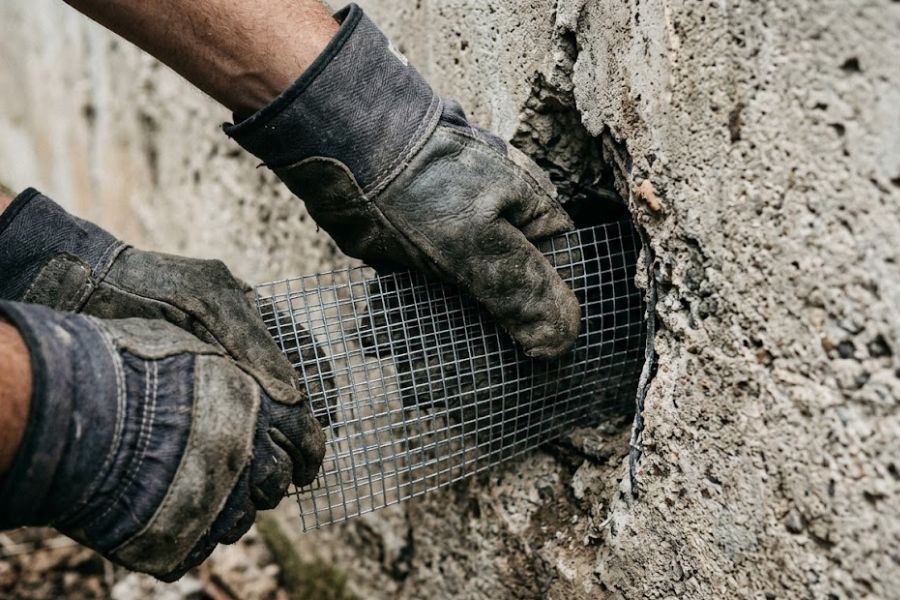
Augusta Rodent Control performs exclusion as a standard component of our full rat and mouse control service, and as a standalone service for properties that have already cleared the active infestation. Every exclusion job begins with a documented entry-point survey — mapping every gap, crack, utility penetration, and roofline opening that shows evidence of use or is structurally vulnerable. Materials are selected based on the substrate, the gap size, and the species involved. We do not use expandable foam alone for rodent exclusion — rats gnaw through it. We use hardware cloth, galvanized steel mesh, copper wool, and appropriate caulks over foam backing.
Common Augusta entry points: Roof-rat entry is almost always at or above the roofline — soffit vent gaps, fascia board separations, and pipe penetrations through the roof deck. Norway rat entry is ground-level — foundation cracks, garage door sweeps, utility penetrations at or below grade, and crawl-space vent screens. House mice use any gap larger than a quarter-inch anywhere on the structure.
What Rodent Exclusion Includes
- Full exterior entry-point survey
- Entry-point photo documentation
- Gap sizing and species-risk assessment
- Steel wool and hardware cloth installation
- Expandable foam with mesh backing
- Pipe-penetration sealing (caulk + flashing)
- Crawl-space vent screen replacement
- Soffit and fascia gap sealing
- Door sweep assessment and replacement recommendation
- Roofline gap sealing
- Before/after documentation
- Written entry-point map for your records
Exclusion Materials for Augusta's Climate
Augusta's humidity and temperature swings affect material selection in ways that matter. Expandable foam contracts and cracks over time in high-humidity environments — we use it only as backing under hardware cloth or mesh, never as the primary exclusion material. Galvanized hardware cloth (¼-inch mesh) is the workhorse for most openings. Copper wool is used for smaller pipe penetrations and gaps where hardware cloth cannot be secured. Aluminum flashing is standard around pipe penetrations at roofline level. Exterior-grade silicone caulk is used for hairline cracks and gaps under ½ inch where rodent passage is possible but hardware cloth installation is not practical.
Real Solutions for Augusta's Year-Round Rodent Pressure
Exclusion paired with removal is the only approach that produces lasting results. Call now to schedule an entry-point survey for your Richmond County property.
📞 Call (844) 635-0403What Materials We Use for Different Entry Points
Rodent exclusion is a materials decision before it's a labor decision. The wrong material at the wrong location either fails within months (cheap foam in exposed exterior locations) or creates a maintenance liability (steel mesh in spots that need flexibility). Augusta's climate — humid summers, freeze-thaw cycles in winter, severe UV exposure — accelerates failure of inappropriate materials. The choices below reflect what actually holds up across the seasons here.
| Entry Point Type | Material We Use | Why This Choice |
|---|---|---|
| Small foundation gaps (under 1") | Copper mesh + polyurethane sealant | Copper resists corrosion in Augusta's humidity; rodents can't chew through it. Polyurethane sealant remains flexible through freeze-thaw. |
| Larger foundation gaps (1"–4") | Hardware cloth (¼" galvanized) + masonry sealant | Galvanized hardware cloth lasts 15+ years in Augusta soil conditions. Bonded to masonry with appropriate sealant. |
| Pipe penetrations (interior) | Stuf-Fit copper mesh + escutcheon plates | Allows for pipe movement and thermal expansion without breaking the seal. |
| Pipe penetrations (exterior) | Hardware cloth wrap + polyurethane sealant | Withstands UV exposure and weather cycling on exterior walls. |
| Soffit and roofline gaps | Powder-coated steel mesh, color-matched | UV-stable, doesn't visually degrade the home exterior. Critical for historic and customer-facing properties. |
| Garage door gaps | Replacement weatherstripping + threshold seal | Worn door sweeps are the single most common point of mouse entry in newer construction. Replacement is faster and more durable than patches. |
| Crawl space vents | ¼" hardware cloth screens, frame-mounted | Allows required airflow while excluding rodents. Hand-cut and frame-fastened to last decades. |
| Dryer vents and HVAC penetrations | Animal-rated vent covers (Pestop, Reece) | Purpose-built for this use case. Inferior screen mesh on standard vent covers fails in Augusta heat within 2–3 years. |
Three materials we deliberately don't use for permanent exclusion: expanding foam alone (rodents chew through it within weeks), steel wool (rusts quickly in Augusta humidity), and aluminum window screen (too thin to resist rat teeth, useful only for insect exclusion). Where these materials appear in DIY exclusion work, the failure mode is predictable — they slow rodents briefly without stopping them.
Cost of Rodent Exclusion in Augusta
Exclusion pricing depends almost entirely on how many entry points exist on a given property and how accessible they are. A 1,200-square-foot home with twelve identified gaps takes less work than a 2,400-square-foot home with forty gaps, regardless of total square footage.
| Exclusion Scope | Price Range | Typical Use Case |
|---|---|---|
| Inspection & exclusion estimate | $150–$275 | Full property walkthrough, written estimate with entry point map and material recommendations. |
| Targeted exclusion (5–15 entry points) | $350–$850 | Specific identified gaps, no full structural sealing. Common when a homeowner knows the problem area. |
| Comprehensive exclusion (15–40 entry points) | $800–$2,200 | The standard scope for established Augusta homes — full structural sealing producing durable results. |
| Historic / preservation-grade exclusion | $1,500–$4,500+ | Required for protected historic structures or where matched-finish materials matter. Olde Town, Summerville core, registered historic homes. |
For homes that have just completed a successful rodent removal, comprehensive exclusion typically follows within 1–2 weeks while the entry points are still freshly documented and accessible. Doing both as a single project rather than separately saves on inspection labor that would otherwise be duplicated.
Exclusion FAQ
Can I schedule exclusion without a full removal service?
Yes. We offer standalone exclusion for properties where the active infestation has already been addressed. We still perform a full inspection to confirm no active activity remains before sealing — sealing rats inside creates a different problem.
How long does exclusion last?
Properly installed hardware cloth and metal flashing lasts many years in Augusta's climate. Caulk-only sealing requires periodic inspection and reapplication, typically every 2–3 years in high-humidity environments. We document every material used so you know what to monitor.
Will exclusion damage my historic Augusta home?
We work extensively in Summerville, Harrisburg, and Olde Town properties with historic fabric. Our approach for heritage structures avoids penetrating original material wherever possible and uses reversible or minimally invasive methods when working near historic masonry and wood.
What gaps are too small to worry about?
Rats need a gap roughly the size of a quarter to enter — about ½ inch diameter. Mice can enter through a hole the size of a dime — about ¼ inch. We seal any confirmed or suspected rodent entry point regardless of size, and flag structural gaps that are too large to seal without a contractor.
How long does professional exclusion last?
The materials themselves carry varying lifespans — copper mesh and galvanized hardware cloth typically last 15+ years; powder-coated steel and polyurethane sealants last 10–15 years; weatherstripping replacement lasts 5–8 years before needing refresh. Catastrophic failures from severe weather can shorten any of these. We warranty our work for 12 months against material defects and installation; annual inspection extends real-world durability.
Can you exclude without removing the rodents first?
Sometimes, but it's usually a mistake. Sealing entry points while rodents are still inside traps them indoors with no exit, which makes the immediate problem worse. The exception is exterior pre-emptive exclusion — sealing exterior gaps on a property with no current interior activity. Where infestation is active, removal precedes exclusion in nearly every case.
Do I need exclusion if I just have a one-time mouse?
If only one mouse is confirmed and the inspection identifies no other entry points or evidence of activity, basic exclusion of the single identified entry path is usually sufficient — typically $150–$300 of focused work. Full property exclusion isn't warranted in that scenario. The inspection tells us which scope fits.
Does Augusta's climate affect exclusion material choices?
Yes — significantly. Augusta's humidity accelerates corrosion of non-galvanized metals; UV exposure degrades polymers faster than cooler markets; freeze-thaw cycling (mild but present) breaks down rigid sealants. We specify materials rated for this climate, which is why our material list above is more specific than generic exclusion practice. Materials adequate for upstate New York will not last in Augusta.
What's the difference between exclusion and proofing?
Practically: very little. "Exclusion" emphasizes the structural sealing work; "rat proofing" or "mouse proofing" emphasizes the species-specific outcome. Both refer to the same category of work — sealing entry points to prevent rodent access. The terms get used interchangeably across the pest control industry.
Related Services
Rat Proofing
Preventive hardening for rat-vulnerable properties before an infestation establishes.
Attic Proofing
Full roofline exclusion for roof-rat entry — soffit vents, fascia gaps, and pipe penetrations.
Crawl Space Sealing
Foundation and crawl-space exclusion for older Augusta homes with Norway rat and mouse exposure.