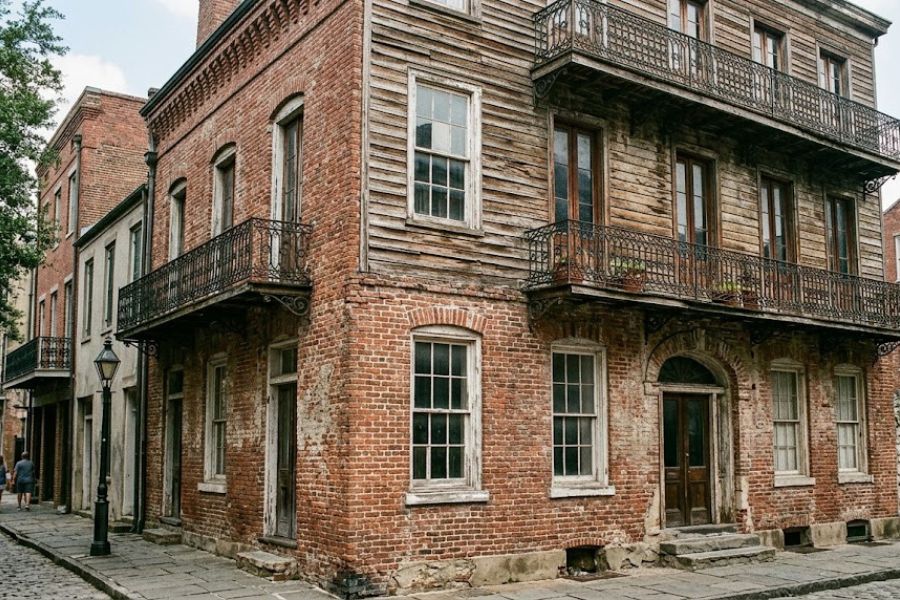
Why Historic Augusta Homes Need a Different Approach
Historic home rodent control in Augusta requires both technical pest expertise and an understanding of 19th-century construction methods. The homes in Summerville, Olde Town, and Harrisburg were built with materials and techniques that modern exclusion methods can damage if applied without care — original heart pine millwork, hand-pressed brick, lime mortar, and old-growth wood framing that responds differently to drilling, caulking, and mechanical fastening than modern construction does.
Augusta Rodent Control works in the historic district regularly enough to understand the specific vulnerabilities of each neighborhood's dominant construction era. Summerville's large homes on Walton Way, Milledge Road, and Heard Avenue are primarily late Victorian and early Craftsman construction with attic spaces that roof rats access via fascia gaps and soffit vents — and that require ladder work and roofline access rather than interior treatment. Olde Town's 1880s-era brick properties have original crawl spaces with brick pier foundations that have settled over 130+ years into gaps Norway rats can use freely. Harrisburg's working-class Victorian housing has both.
Preservation-first exclusion: We do not drill through original millwork, cut original plaster, or apply invasive sealants to historic masonry without discussing alternatives first. For most historic Augusta entry points, there is a reversible or less invasive option that provides adequate rodent exclusion without damaging historic fabric.
Historic Augusta Rodent Service Coverage
- Summerville (Walton Way corridor)
- Olde Town historic district
- Harrisburg Victorian housing
- Augusta Historic District core
- Forest Hills (older canopy-neighborhood homes)
- Highland Park heritage properties
- Any pre-1940 Richmond County structure
What Historic Home Service Includes
- Construction-era assessment before any work begins
- Non-invasive entry-point survey
- Heritage-compatible exclusion materials
- Reversible sealant options for masonry
- Crawl-space work respecting original pier foundations
- Attic work respecting original framing and finish
- Photo documentation before and after
- Written record of all materials used
Real Solutions for Augusta's Year-Round Rodent Pressure
Historic home rodent control that respects the fabric of Augusta's irreplaceable housing stock. Call to schedule a heritage-aware inspection.
📞 Call (844) 635-0403Working Around Augusta's Historic Construction Details
Rodent control in Augusta's historic neighborhoods — Olde Town, the historic core of Summerville, the Harrisburg blocks listed on the National Register — requires methods that wouldn't be used on newer construction. The materials, the access approach, and the documentation requirements all shift when the structure has preservation value. Done correctly, the work is invisible after completion. Done with standard methods, the work damages irreplaceable historic fabric.
Plaster wall voids are common in pre-1940 Augusta homes and require different access methodology than modern drywall. Standard pest-control practice opens drywall with a 2-inch hole saw to install bait or remove rodents. The same approach on original plaster cracks the surrounding plaster well beyond the access point and creates restoration work that costs more than the pest control. We use minimum-disturbance access (typically through existing electrical outlet boxes or HVAC registers) on plaster-walled properties.
Original wood trim, baseboards, and door frames on Augusta historic homes often feature heart-pine or old-growth oak that's nearly impossible to match if damaged. Removing and reattaching trim — sometimes necessary for floor-level exclusion work — requires careful labeling, gentle prying with shims rather than pry bars, and reuse of original fasteners or matched-period replacements. Standard pest-control practice doesn't account for this; our protocol on historic properties does.
Original brick foundations use soft lime mortar that degrades when modern polyurethane or polymer-modified sealants are applied directly. The sealants don't bond properly, the mortar joint crumbles, and the historic appearance is lost. We use lime-mortar-compatible sealants and matched-color material to maintain both rodent exclusion and visual integrity.
Slate, terracotta, or original metal roofing requires specialty access. Walking on slate without proper hooked-ladder protocols cracks tiles. Working at terracotta valleys without dispersion mats damages glaze. The roofline-entry-point sealing that's straightforward on a composite-shingle roof becomes a different protocol on these surfaces.
Materials and Methods for Augusta Historic Properties
The material choices that make historic rodent control work are sometimes more expensive than standard practice and almost always slower to apply. Documented methods we use across Augusta's historic district properties:
| Application | Standard Material | Historic-Appropriate Material |
|---|---|---|
| Foundation gap sealing | Polyurethane sealant | Lime-mortar-compatible siliconized acrylic |
| Roofline gap sealing | Polyurethane sealant + steel mesh | Copper mesh + lime mortar (for masonry chimneys, parapets) |
| Brick mortar joint repair | Polymer-modified mortar | Lime-mortar tuckpointing matched to original |
| Visible exclusion screening | Galvanized hardware cloth (silver) | Powder-coated copper or brass mesh (color-matched) |
| Crawl space vent replacement | White vinyl vent frames | Cast iron or bronze vents matched to period |
| Wood trim repair (where needed) | Modern composite trim | Heart pine or old-growth oak from salvage stock |
Where a property is listed on the National Register or contributes to a National Register district, additional documentation may be required for any exterior alterations. We coordinate with the Historic Augusta organization and the Georgia Historic Preservation Office where work scope warrants it. Most rodent exclusion falls below the threshold for review, but visible exterior work on listed properties sometimes requires approval.
Cost of Historic-Home Rodent Control in Augusta
| Scope | Price Range | Includes |
|---|---|---|
| Inspection & preservation-grade estimate | $225–$350 | Full property inspection, documentation of historic features, written estimate with material specifications. |
| Targeted historic exclusion (single zone) | $650–$1,400 | Specific identified zone — foundation perimeter, single chimney, or roofline section — with preservation-appropriate materials. |
| Comprehensive historic property exclusion | $1,800–$4,500 | Full property perimeter with matched materials throughout. Standard scope for permanent results on listed or contributing properties. |
| Historic exclusion + active removal | $2,400–$6,500+ | Combined removal of active infestation plus comprehensive exclusion in historic-appropriate methodology. |
Historic Home FAQ
Will exclusion work damage my historic home?
Not when done correctly. We prioritize reversible and minimally invasive options and discuss any penetration through original fabric with you before proceeding. For most historic Augusta entry points, there is an approach that provides adequate exclusion without damaging historic material.
Do you have experience with Olde Town and Harrisburg properties specifically?
Yes. We work in both neighborhoods regularly and understand the specific vulnerabilities of the brick-pier crawl space construction that dominates Olde Town and the mix of crawl space and raised slab in Harrisburg. Call and describe your property — we can usually diagnose the likely entry vectors before we arrive based on construction era and location.
Can you work with my preservation guidelines?
Yes. If your property is subject to local historic district guidelines or a preservation easement, share those constraints with us before we begin and we will design the exclusion approach around them. We have worked within preservation restrictions before and are comfortable doing so.
Is my home actually "historic" or just old?
The practical distinction is whether the property has preservation features worth protecting — original plaster, period trim, slate or terracotta roofing, soft-mortar brick foundations. A 1920s bungalow that's been fully renovated with drywall, modern trim, and composite shingles is functionally newer construction even if the building is old. Our inspection identifies which features warrant preservation-grade methods.
Does Augusta have any historic preservation requirements I need to worry about?
For most rodent exclusion work, no formal review is needed — the work is below the threshold for preservation oversight. For visible exterior alterations on properties contributing to the Olde Town National Register District or listed individually, the city's historic preservation review can apply. We coordinate documentation where it might be needed.
Will historic rodent control take longer than standard work?
Yes — typically 30–60% more time than the same scope on newer construction. The materials require more careful application; the access methods minimize disturbance to historic surfaces; the documentation is more thorough. Comprehensive exclusion that takes 1–2 days on a 1995 ranch home may take 3–5 days on a 1910 historic property.
Can you match the appearance of my original brick or wood?
For most common Augusta brick colors and mortar types, yes — we maintain a small library of matched lime mortars and tuckpointing materials for the typical pre-1930 Augusta brick palette. Wood matching is harder; heart pine and old-growth oak from salvage stock can match most original construction, but exact matching of patinated wood requires sample-and-source work that adds time. We document existing finishes before any disturbance.
What if my historic home has been previously treated with damage?
Prior pest-control damage to historic features is something we see regularly. Standard practice in the industry includes foam-injection into walls (which can stain plaster), polyurethane sealants on brick (which fail over lime mortar), and steel-mesh exclusion screens visible from the street (which violate the property's historic character). We can typically remediate prior damage as part of new scope — replacing inappropriate materials with preservation-grade alternatives where the original surface is still intact.
Can my insurance or historic preservation grant cover any of this?
Homeowners insurance generally does not cover rodent damage or preventive exclusion — pest control is excluded from standard policies. Federal Historic Preservation Tax Credits and certain Georgia preservation grants do apply to rehabilitation work on listed historic properties, and where rodent damage has degraded historic features (original plaster, period millwork), restoration may qualify even if the underlying pest control does not. Documentation matters for any preservation-related funding.
Related Services
Crawl Space Sealing
Below-grade exclusion for Augusta's older pier-foundation homes — the primary Norway rat entry zone.
Attic Rodent Proofing
Roofline exclusion for roof rat prevention in historic Summerville and Forest Hills properties.
Rat Control Services
Active rat removal to precede exclusion — both species common in Augusta's historic districts.