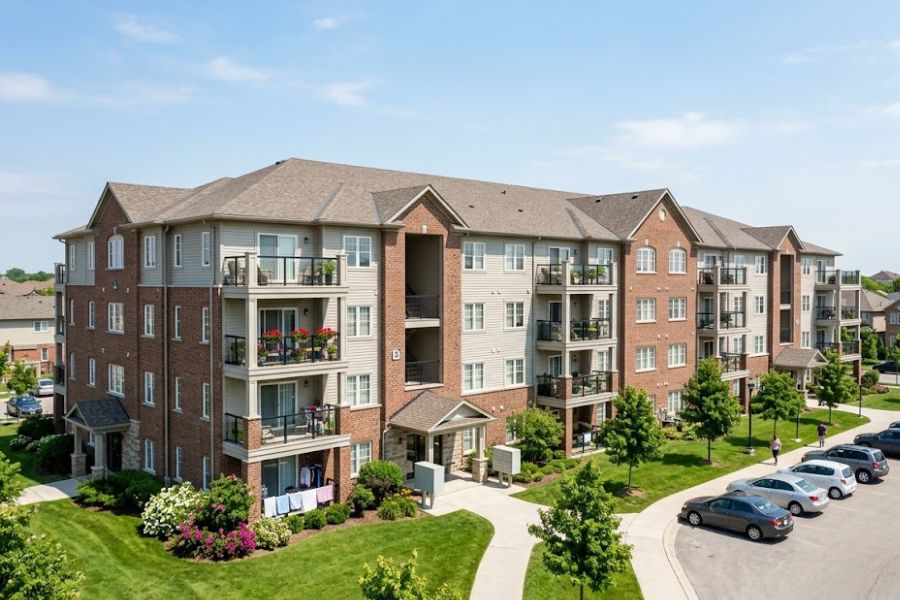
Rodent Control Built for Augusta Property Managers and Landlords
Rodent control in multi-unit residential properties is fundamentally different from single-family residential work. Shared wall voids, common pipe chases, centralized HVAC, and shared exterior spaces mean rodents move freely between units through pathways that unit-level treatment cannot address. Augusta Rodent Control designs property management programs around the building, not the individual unit complaint — because that is the only approach that actually works.
Augusta's rental housing stock includes everything from historic Harrisburg and Olde Town duplexes with original crawl-space construction to post-2010 apartment complexes in the Evans and Grovetown corridors near Fort Eisenhower. Each property type has a distinct rodent risk profile, and our programs reflect that. We work with individual landlords managing a single duplex, regional property managers overseeing dozens of Augusta-area units, and investment portfolios spanning Richmond County and the SC side of the CSRA.
Georgia landlord obligations: Georgia landlord-tenant law generally requires landlords to maintain rental properties in habitable condition — which includes being free from rodent infestation. Treatment is typically the landlord's responsibility unless a tenant's actions caused or contributed to the infestation. We can provide documentation that supports your records in the event of tenant disputes or code-enforcement inquiries.
What Our Property Management Program Includes
- Building-wide inspection, not just reported units
- Species identification and pressure-source mapping
- Common-area treatment and exterior perimeter
- Shared-space bait-station installation
- Unit-level treatment with tenant coordination
- Pipe-chase and wall-void assessment
- Entry-point mapping and exclusion recommendations
- Service records per property and per unit
- Consolidated invoicing for multi-property accounts
- 24/7 emergency dispatch for tenant calls
- Tenant notice template language
- Annual program review and prevention planning
Augusta Property Types We Serve
| Property Type | Primary Rodent Issues | Program Approach |
|---|---|---|
| Historic duplexes / triplexes Harrisburg, Olde Town, Summerville | Crawl-space Norway rats, house mice entering via original brick-pier foundations and original vent gaps | Crawl-space inspection + perimeter exclusion + foundation sealing |
| Mid-century apartment buildings Southside, West Augusta, Sand Hills | Roof rats via aging roofline, Norway rats via shared dumpster pads and utility rooms | Roof-line and attic inspection + dumpster-pad bait stations + common-area treatment |
| Newer suburban complexes Evans, Grovetown, Martinez corridors | House mice through door-sweep gaps and HVAC penetrations; Norway rats near construction debris | Perimeter program + door-sweep audit + HVAC penetration sealing |
| Military-adjacent rental housing Grovetown, Fort Eisenhower area | High-turnover units with inspection gaps; mice entering during vacancy periods | Turnover inspections + vacancy-period monitoring + move-in treatment |
Managing Tenant Rodent Complaints
Tenant rodent complaints are time-sensitive from a legal and habitability standpoint. A complaint that goes unaddressed for more than a few days can become a code-enforcement issue, a withholding-of-rent claim, or a basis for lease termination in Georgia. Our property management clients call us the same day a complaint is filed — we document the inspection, provide written findings, and give the property manager a service record they can show to the tenant, a code inspector, or a judge if needed.
We coordinate directly with property managers, not with tenants. We provide you with the documentation; you handle tenant communication through your normal channels. If you want to use us for emergency after-hours tenant calls, we can accept those calls directly and alert you to the findings — that arrangement is available for established property management accounts.
Locally Owned. Open 24/7. Call Today.
Portfolio rodent programs for Richmond County landlords and property managers. One call sets up the whole program.
📞 Call (844) 635-0403Why Apartment Rodent Control Differs from Single-Family Work
Multi-unit residential pest control is operationally different from single-family work in three specific ways that affect both scope and pricing. Property managers who understand these differences make better decisions about service contracts; those who don't tend to underbuy service and end up paying for repeated single-unit responses that never resolve the underlying building-level problem.
Between-unit transmission. Rodents move freely through shared wall cavities, plumbing chases, HVAC plenums, and crawl space access between adjacent units. A single-unit treatment that addresses Unit 4B without coordinating access to Units 3B, 4A, 4C, and 5B leaves the colony intact in the adjacent voids. Within 30-60 days the activity reappears, and the tenant calls again. Effective apartment work either treats the building zone affected or, at minimum, inspects the adjacent units to confirm scope.
Tenant-coordinated access. Unlike single-family work where the homeowner is on-site, apartment work requires advance notice to multiple tenants and a coordinator from management. Service times shift around tenant schedules. We work with property management to batch inspections and treatments into efficient access windows, which keeps costs lower than spot-treating individual unit calls.
Documentation requirements. Multi-unit owners typically need treatment records for unit-by-unit lease compliance, insurance audits, and property-condition disclosures. We provide unit-level documentation with each visit — what was inspected, what was treated, what conditions were observed — formatted for direct inclusion in property files.
Cost of Apartment & Property Management Rodent Control
Multi-unit pricing typically lands somewhere between per-unit residential rates and full commercial contract pricing — the work scales but it doesn't scale linearly with unit count.
| Property Configuration | Price Range | Service Frequency |
|---|---|---|
| Duplex / quadplex (single building) | $300–$650 per visit | Treatment-as-needed or quarterly maintenance |
| Small complex (8–24 units, 1–2 buildings) | $450–$900 per visit | Monthly common-area + as-needed unit response |
| Mid-size complex (25–80 units) | $800–$2,200 per visit | Monthly building perimeter + bi-weekly response window |
| Annual maintenance contract (any size) | $2,400–$18,000+ annually | Scheduled visits + included response calls within contract scope |
For Augusta-area property management companies operating multiple complexes — typical of the apartment market across West Augusta, the Wheeler Road corridor, and the Evans / Grovetown growth area — we provide portfolio pricing that reflects shared dispatch efficiency. A management company with five properties pays less per property than five separate single-property contracts because routing efficiency reduces our costs and we pass that through.
FAQ — Apartment & Property Management
Do you work with property management companies in Augusta?
Yes. We work with individual landlords, local property management companies, and multi-property investors across Richmond County and the CSRA. Coordinated scheduling, consolidated invoicing, and portfolio-wide programs are all available.
Who is responsible for rodent control in Augusta rental properties?
Under Georgia landlord-tenant law, landlords are generally required to maintain properties in habitable condition — which includes freedom from rodent infestation. Treatment responsibility typically falls to the landlord. We provide documentation that supports your position if tenant disputes arise.
Can you treat individual units without disturbing the whole building?
Yes for targeted situations, but rodents in multi-unit buildings typically move through shared wall voids and pipe chases. Treating one unit while ignoring shared pathways usually gives temporary results. We recommend building-wide inspection even when only one unit has reported activity.
How do you handle tenant coordination?
We work through the property manager or landlord for all tenant communication. We do not contact tenants directly without your authorization. We can provide templated tenant notice language for you to distribute through your normal channels.
Do you offer vacancy-period monitoring?
Yes. Vacant units — especially those that sat empty for more than a few weeks — are the highest rodent-entry-risk period for multi-unit buildings. We offer turnover inspection programs that flag entry issues before new tenants move in.
Who pays for apartment rodent control — landlord or tenant?
Under standard Georgia and South Carolina landlord-tenant law, the landlord is generally responsible for keeping the structure free of rodent infestation when the cause is structural (entry points, building condition). Tenant responsibility typically applies when the cause is tenant behavior (sanitation, unsealed food storage). In practice, most lease agreements assign rodent control to the landlord for structural causes and split the cost only for tenant-induced infestations. We document the likely cause during inspection to support whatever the lease specifies.
How do you coordinate access across multiple units?
For complexes with on-site management, we coordinate through the office to batch inspections and treatments. For owner-managed buildings, we work directly with the owner to schedule a window — typically a 4-hour block — during which all affected and adjacent units are made accessible. Tenant notice requirements (Georgia 24-hour minimum, varies by lease) are coordinated with management.
What if some tenants refuse access?
Refusal happens occasionally and creates a coverage gap. When a tenant refuses access, we treat the units we can access, document the refusal in writing for the property file, and note the limitation in our service report. Property management then has the lease-enforcement option (entry rights vary by state and lease terms). We don't force access — but we also document accurately so the property record reflects the actual scope of work completed.
Can you provide reports for our property management software?
Yes. Our service reports are designed for direct inclusion in property management systems (Appfolio, Buildium, Yardi, RentManager). Each visit produces a unit-by-unit log of what was inspected, what was treated, conditions observed, and any tenant communications. Reports can be delivered as PDF, CSV, or via email to specific addresses you designate.
Related Services
Rodent Exclusion
Permanent sealing of entry points across multi-unit properties — foundation, roofline, and utility penetrations.
Commercial Rodent Control
Ongoing programs with documentation for commercial property operators across Richmond County.
Military Housing
Rodent programs for Fort Eisenhower–adjacent rental properties in the Grovetown and Evans corridors.