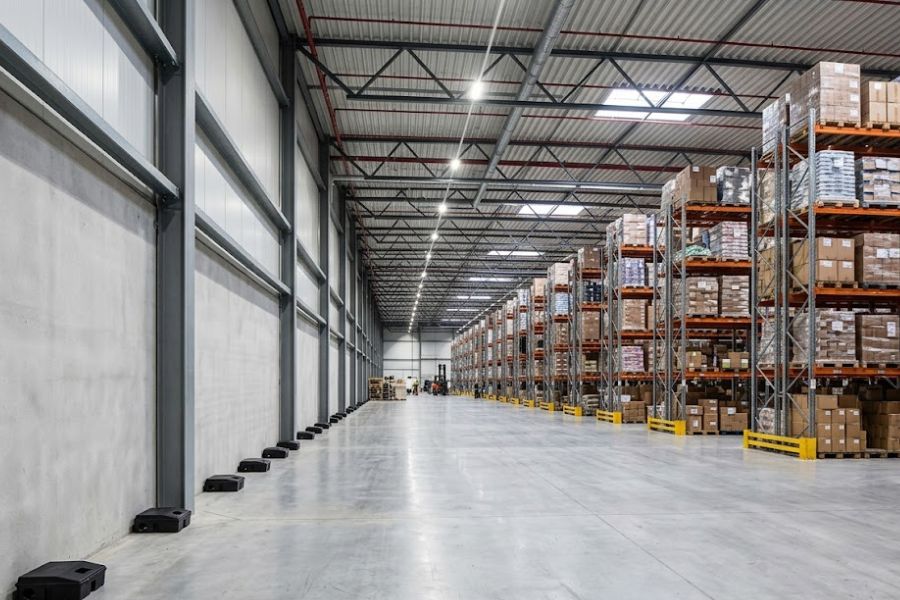
Rodent Control for Augusta's Warehouse and Freight Corridor
Warehouse rodent control in Augusta is shaped by a specific geographic reality: the Augusta Canal and Savannah River industrial corridor sustains Norway rat populations that are both persistent and continuously replenished by freight traffic. Unlike residential infestations that originate from a single pressure source, industrial facilities near Augusta's western freight zones face ongoing re-introduction risk from inbound shipping — pallets, containers, and equipment that carry rodents from originating warehouses across the region.
An effective warehouse rodent program has two components that residential work does not: perimeter exclusion aggressive enough to block the ongoing pressure from adjacent industrial harborage, and interior protocols that keep product zones free from both rodents and treatment products. Augusta Rodent Control designs both into every industrial account from the first site survey.
Inbound freight risk: Warehouses receiving from multiple vendors are at continuous re-introduction risk regardless of how well-sealed the building is. Norway rats travel in palletized goods, and roof rats are documented stowaways in shipments from coastal ports. We can help you develop inbound receiving inspection protocols that complement the treatment program.
What Our Warehouse Program Includes
- Full facility and perimeter site survey
- Species identification and pressure-source mapping
- Exterior perimeter bait-station installation
- Loading dock door seal assessment
- Interior trap placement (non-chemical, product-safe)
- Roof-level and HVAC penetration inspection
- Rodent activity monitoring stations
- Visit logs and corrective action records
- Bait-station placement maps for auditors
- Inbound receiving zone recommendations
- 24/7 emergency dispatch between visits
- Monthly or bi-monthly service frequency
The Augusta Canal and Industrial Corridor
The Augusta Canal, operational since 1845, runs 7.5 miles along the northwest edge of the city and passes through or adjacent to a significant portion of Augusta's industrial real estate. Facilities along the canal corridor — whether they front the canal directly or share block access with buildings that do — face sustained Norway rat pressure from the canal bank harborage that no amount of interior treatment alone can address. The canal itself provides year-round water access, vegetation cover, and structural harborage that supports a stable rat population regardless of season.
Warehouses in this zone require exterior perimeter programs that go beyond standard residential bait-station spacing. We typically install stations at 20–25 foot intervals along the most exposed exterior faces of canal-adjacent buildings, with heavier placement near loading dock areas, dumpster pads, and ground-level utility penetrations. Combined with dock-door seal inspections and interior monitoring, this approach creates a defensible barrier between the canal population and your product.
Trusted CSRA Rodent Specialists
Industrial rodent programs for Augusta warehouses and distribution facilities. Site survey and program proposal at no charge.
📞 Call (844) 635-0403Warehouse-Specific Risk Zones in Augusta Industrial Properties
Industrial-scale rodent control isn't an enlarged version of residential work — it's a different protocol that prioritizes perimeter management over interior trapping. A 50,000-square-foot warehouse has hundreds of square feet of dock-door seam, dozens of utility penetrations, and an exterior perimeter measured in hundreds of feet. The math forces a different approach: prevent at the perimeter, monitor in the interior, respond only when monitoring detects activity.
Augusta-area warehouses cluster in two main corridors. The older industrial zones along Sand Bar Ferry Road, the Eisenhower-adjacent industrial parks, and the rail-served properties near the riverfront tend to be 1960s–1980s construction with concrete-tilt-up walls, single dock-door bays, and adjacent vacant lot pressure. The newer distribution properties along Bobby Jones Expressway and the Riverwatch corridor in Columbia County are post-2000 construction with tighter envelope but higher unit-volume rodent pressure from the goods flowing through.
The recurring risk zones are predictable across most warehouse configurations:
- Dock door seam degradation. The single largest source of warehouse rodent entry. Rubber dock seals fail within 3–5 years of regular truck contact. The gap created becomes a year-round Norway rat highway.
- Utility chase penetrations. HVAC, electrical, plumbing, sprinkler lines — anywhere the exterior wall is penetrated by infrastructure. The original installation rarely sealed these to rodent-exclusion standard.
- Roof drain and downspout terminations. Norway rats climb roof drains. Where the downspout meets ground-level discharge, gaps form. The path leads directly to dock-adjacent space.
- Sprinkler riser room and electrical room ventilation. These rooms often have continuous ventilation grates sized for airflow, not rodent exclusion. The gaps are entry points by definition.
- Office-warehouse transitions. The interior wall between office space and warehouse floor often has cable, plumbing, and HVAC penetrations that allow rodent movement between the two zones.
Cost of Warehouse Rodent Control in Augusta
Warehouse pricing varies substantially by square footage, dock-door count, and contract structure. The numbers below represent typical Augusta-area pricing for monthly maintenance contracts; one-time emergency response or initial setup pricing is quoted separately.
| Warehouse Size | Monthly Service | Annual Cost |
|---|---|---|
| Small (under 10,000 sq ft, 1–2 dock doors) | $175–$325 | $2,100–$3,900 |
| Mid-size (10,000–50,000 sq ft, 3–8 dock doors) | $300–$650 | $3,600–$7,800 |
| Large (50,000–150,000 sq ft, 8–20 dock doors) | $600–$1,200 | $7,200–$14,400 |
| Distribution center (150,000+ sq ft) | $1,100–$2,500+ | $13,200–$30,000+ |
Initial setup — comprehensive inspection, dock-seal assessment, exterior bait station installation, interior monitoring station placement — is typically billed separately from monthly service. Setup ranges $800–$3,500 depending on size. Emergency response to active warehouse infestations falls outside maintenance contract scope and is quoted at the time of the call. Warehouses serving cold-storage operations and food-grade distribution face the additional constraint of temperature-controlled zones where bait placement, trap materials, and even technician PPE must meet specific food-safety thresholds — we adapt protocols accordingly.
Warehouse Rodent Control FAQ
What treatment options are safe around food inventory?
For food-product warehouses, bait stations are positioned exclusively on the exterior perimeter and in non-product areas such as loading docks, utility rooms, and wall voids. Interior product areas use only snap traps and glue boards in tamper-resistant stations. Every placement is documented so you can demonstrate compliance to auditors.
How do rats get into Augusta warehouses?
Primary entry vectors: overhead dock doors with worn seals, ground-level utility penetrations, roof-level HVAC penetrations, and inbound freight pallets and containers. Perimeter exclusion addresses the building; receiving inspection protocols address the freight vector.
Do you provide audit documentation?
Yes. Visit logs, bait-station placement maps, activity monitoring records, and corrective action documentation formatted for SQF, BRC, and AIB third-party food-safety audits. Discuss your specific audit requirements before we begin the program.
How often should an Augusta warehouse be serviced?
Monthly is standard for facilities in or adjacent to the Augusta Canal and industrial corridors. Bi-monthly is sufficient for lower-exposure facilities with good exclusion. We assess frequency at the site survey and adjust based on monitoring station activity data.
Do you service warehouses during operating hours?
Both options are available. Many Augusta warehouses prefer interior work during off-hours (early morning, evening, weekends) to avoid disrupting receiving and shipping operations. Exterior perimeter work — bait station maintenance, dock-door inspection — can happen during operating hours without disruption. We schedule around your operations.
What's the difference between warehouse and commercial pest control?
Commercial pest control is a broader category. Warehouse-specific work emphasizes perimeter and dock management at industrial scale, with monitoring rather than reactive trapping as the primary protocol. Office buildings, retail, and food service all fall under commercial pest control but use different sub-protocols. Our warehouse service is tuned specifically for the industrial scale and dock-door dynamic.
Do warehouse contracts include emergency response?
Standard monthly contracts include reasonable emergency response within scope — a sighting that requires response within 24 hours is covered. Major active infestations that fall outside maintenance scope (sudden discovery of established colony, contamination event, post-storm intrusion) are typically billed separately at the time. Contract terms specify the boundary clearly so there's no ambiguity during an actual emergency.
Can you work with food-grade warehouses (third-party logistics)?
Yes. Food-grade 3PL warehouses have additional documentation requirements (AIB, SQF, BRC audit support) and product-exclusion zones for bait placement. We maintain food-grade-appropriate protocols and produce audit-ready documentation. The work is similar to standard warehouse service with stricter material restrictions and more detailed record-keeping.
What about warehouses near the Augusta Canal or industrial waterways?
Waterway-adjacent properties face higher Norway rat pressure year-round — water access supports larger outdoor populations than upland areas. We adjust perimeter station density and inspection frequency for these properties. The Sand Bar Ferry corridor, riverfront industrial properties, and canal-adjacent warehouses all receive this elevated protocol within their contract.
Related Services
Commercial Rodent Control
Ongoing programs for restaurants, retail, offices, and industrial sites with health-inspection documentation.
Bait Station Installation
Tamper-resistant exterior bait-station installation and quarterly refill programs for industrial perimeters.
Rodent Exclusion
Permanent sealing of dock doors, utility penetrations, and roofline gaps that allow ongoing rodent entry.