Vacant Homes and Rat Problems in Augusta
A vacant Augusta home is not a neutral rodent environment — it is an invitation. The absence of human activity removes the behavioral suppression that occupied homes provide: no regular movement, no vibration from daily household activity, no lights cycling on and off. Rodents that approach an occupied home hesitantly will investigate a vacant one freely, and Augusta's year-round breeding climate means that a pair of mice that enters in November can be a colony of twenty by the time the new owner takes possession in March.
Why Vacant Homes Are Rodent-Vulnerable
No occupant to notice entry: The gap under the kitchen door sweep that a homeowner would notice through the smell of mouse activity goes undetected in a vacant home for months. Entry points accumulate unnoticed. By the time the property changes hands, the infestation is established and multiple.
No food competition, no predator pressure: Vacant homes have no cat, no regularly disturbed food storage, no human activity suppressing rodent confidence. They provide warmth, shelter, and nesting materials in the form of stored fabric, cardboard boxes, and insulation.
Utilities may be off: A vacant home with no climate control has an attic cycling to extreme temperatures in Augusta's summer — temporarily suppressing roof-rat activity. But the same attic in fall and winter becomes prime roof-rat nesting habitat, and without regular inspection the fall entry is undetected until the next owner moves in.
Common Scenarios in Augusta's Property Market
Estate properties: A home that sat vacant for 6–18 months during estate settlement is among the highest-risk scenarios. The prior occupant may not have maintained entry points; the property sat empty during at least one fall entry season. Estate rodent inspections before listing and before purchase are standard due diligence.
Foreclosure and investor acquisitions: Properties acquired at foreclosure or from distressed sellers frequently have deferred maintenance creating significant entry-point vulnerability. An investor who takes possession without inspection may be acquiring a property with an established colony, contaminated insulation, and gnawed wiring the purchase price did not account for.
Seasonal vacation properties: Properties used primarily during Masters Week and rented otherwise follow a similar pattern — extended vacancy, limited monitoring, and a fall entry season that establishes an infestation during the quiet period.
Pre-purchase rodent inspections: Augusta Rodent Control provides pre-purchase rodent inspections with written reports for buyers and real estate agents. A finding can be used in purchase negotiations, can identify remediation costs to factor into the offer price, and establishes a documentation baseline for the new owner's first year. Call (844) 635-0403 to schedule.
What to Look For When Taking Possession
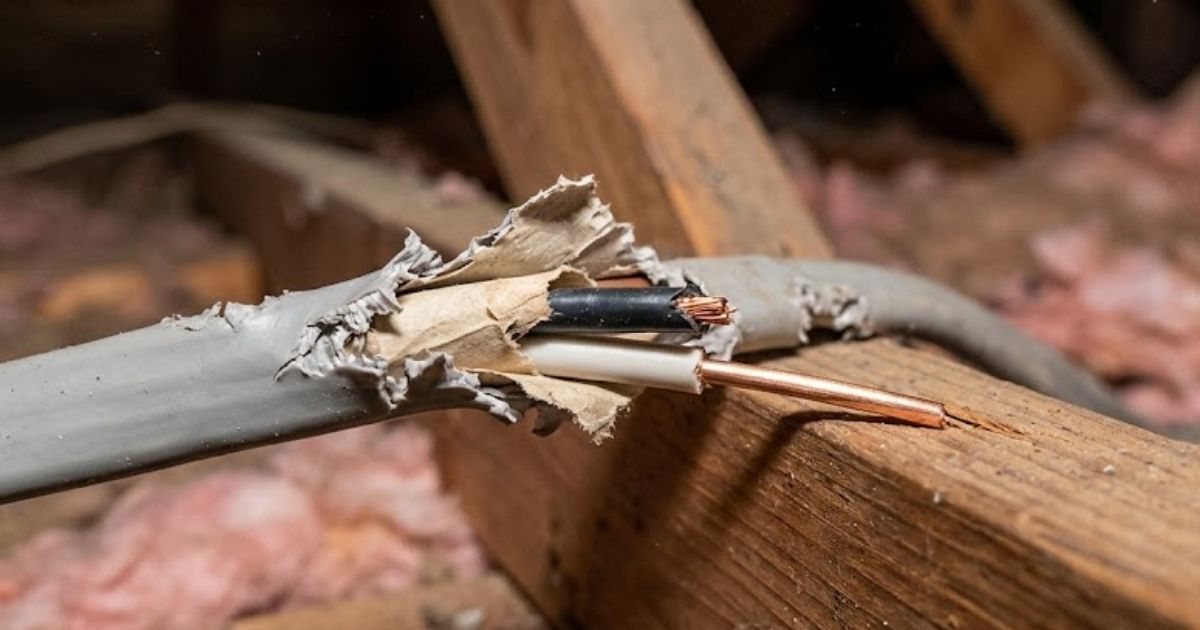
- Attic: Droppings along rafters, concentrated nesting material near eaves, dark staining around soffit vent openings, gnaw marks on wiring insulation
- Crawl space: Soil disturbance or burrow openings near piers, droppings on vapor barrier, nesting material against wall bases, gnaw marks on floor joists
- Kitchen cabinet bases: Droppings along the base of lower cabinets, gnaw marks on cabinet backing, grease trails near plumbing penetrations
- Garage: Droppings in corners, nesting in stored materials, gnaw marks on stored cardboard or fabric
Finding evidence in any of these locations warrants a professional inspection before moving in or renovating — particularly before installing new insulation, which would cover wiring damage or contamination that needs to be addressed first.
Pre-Purchase and Vacant Property Inspections
Written report with photo documentation. Same-day slots across Augusta and Richmond County.
📞 Call (844) 635-0403Why Vacant Properties Develop Rodent Issues So Quickly
Three factors compound to make vacant properties rodent-attractive in ways that occupied properties aren't.
Absence of disturbance. Occupied homes produce constant low-level disturbance — foot traffic, noise, HVAC cycling, lighting changes — that deters rodents from establishing. Vacant homes are quiet enough that rodents move beyond entry-point exploration into structural establishment within days. A property occupied on Friday and vacant on Saturday can show rodent activity by the following week.
Reduced detection. Activity that would be immediately noticed in an occupied home goes undetected in a vacant property until someone visits. By the time the realtor or property manager checks in monthly, the activity that began three weeks ago has progressed to early-colony stage. Compounding monthly delays mean discovery often happens at Stage 2 or 3 rather than Stage 1.
Maintenance suspension. Vacant property maintenance typically focuses on the basics — utilities, exterior appearance, structural integrity. Pest prevention isn't usually on the maintenance schedule. The exterior conditions that would be addressed promptly in occupied properties (new gaps from settling, degraded weatherstripping from heat, accumulated landscape harborage) get noticed only at quarterly or annual inspections.
Vacant Property Inspection Schedule
| Property Type | Recommended Inspection Frequency | Rationale |
|---|---|---|
| For-sale property, occupied seller | Pre-listing inspection + monthly through listing period | Activity during showings affects buyer perception; baseline documentation supports disclosure |
| For-sale property, vacant | Monthly minimum, biweekly during high-pressure seasons (fall) | Rapid issue development; impact on sale-price negotiation |
| Rental between tenants | Pre-listing inspection + during showings; treatment as needed before next tenant | Tenant disclosure requirements; expedited turnover schedule |
| Vacation home (occupied seasonally) | Pre-arrival inspection + post-departure walkthrough | Catches issues developed during absence; supports next season's arrival |
| Investment property under renovation | Monthly during construction; pre-occupancy assessment | Construction creates entry points; absence prevents detection |
| Estate property (probate, unoccupied) | Monthly minimum; quarterly comprehensive | Long timelines without occupancy; preservation of property value |
For Augusta property managers and realtors handling multiple vacant properties, the inspection scheduling becomes a logistics problem rather than a single-property decision. Property management contracts often combine reactive response to activity with scheduled monthly walkthroughs at portfolio level — the routing efficiency reduces per-property cost compared to scheduling each property individually.
What Vacant-Property Treatment Scope Includes
The work itself isn't fundamentally different from occupied-property treatment, but the timing and scheduling fit different constraints. Vacant properties allow more aggressive treatment timing without coordinating around occupancy — full-day exclusion work that would disrupt occupied living can happen freely in vacant property. The trade-off is that nobody is monitoring between visits, so the treatment plan emphasizes durability over rapid response.
For Augusta investors and homeowners managing vacant properties during sale, renovation, or estate transitions, documented baseline inspection protects both the property value and the eventual transaction. Disclosure obligations vary by transaction type, but having current documentation supports whatever disclosure is required and prevents post-sale dispute when issues are discovered by buyers or new tenants. Properties in older neighborhoods like Harrisburg or Olde Town benefit most from this documentation because the structural conditions create higher baseline expectations.
What Realtors and Property Managers Should Know
Pre-listing rodent inspection on Augusta properties produces several benefits beyond the immediate health-and-safety considerations. The inspection report documents condition for disclosure purposes, identifies issues that might appear during buyer inspections (eliminating renegotiation surprises), and provides a baseline against which any post-sale concerns can be evaluated. Properties with documented clean inspection reports negotiate from a stronger position than properties without documentation.
For property managers handling rental portfolios, scheduled rodent inspection at turnover is increasingly standard practice. The cost is modest; the protection against tenant disputes about pre-existing conditions is substantial. Documentation of property condition at turnover supports landlord positions in both routine inspections and dispute proceedings.