How to Rodent-Proof Your Augusta Home Before Winter
Augusta's mild winters do not stop rodent activity — they redirect it. As outdoor temperatures cool in October and November and food sources diminish, rodents begin looking for interior harborage. This is the highest-risk entry window of the year for Richmond County homeowners, and a targeted walkthrough in September or October is the most cost-effective rodent prevention investment you can make.
Exterior Ground Level: Start at the Foundation
Walk the full exterior perimeter at foundation level, looking for gaps larger than ½ inch (rat-accessible) or ¼ inch (mouse-accessible):
- Utility penetrations at or near grade: Where gas lines, electrical conduit, and HVAC lines enter the foundation. Even a well-sealed penetration degrades as caulk ages and pipes shift.
- Foundation cracks: In Augusta's older housing stock, concrete block and brick foundations develop cracks through normal settling. Any crack wider than ½ inch at its widest is rat-accessible.
- Crawl-space vents: Original screens from the 1950s–1970s corrode through. Check every screen for holes and rust damage. Push on each — screens that flex or rattle have already been compromised.
- Garage door bottom seal: Stand inside with the door closed and look for daylight at the bottom corners. Light means gap; gap means mouse access.
Exterior Roofline: The Roof Rat Entry Zone
For homes in Summerville, Forest Hills, and other canopy neighborhoods, roofline inspection is essential. Roof rats travel the canopy and access structures from above — ground-level exclusion alone does not stop them.
- Soffit vents: Aluminum soffit vents from the 1950s–70s era corrode and develop holes. Dark staining or debris around a vent indicates activity.
- Fascia board gaps: At roofline corners where two boards meet, check for separation. A quarter-inch gap at a corner is sufficient for a roof rat.
- Tree branch clearance: Any branch within four feet of your roofline is a potential roof rat bridge.
Augusta humidity and material selection: Standard expandable foam is the wrong primary material — it contracts in humidity, cracks in heat cycles, and rats chew through it. Use steel wool or hardware cloth mechanically fastened over openings, and exterior-grade silicone caulk for small hairline gaps. These hold in Augusta's climate.
Doors and Windows: The Micro-Gap Check
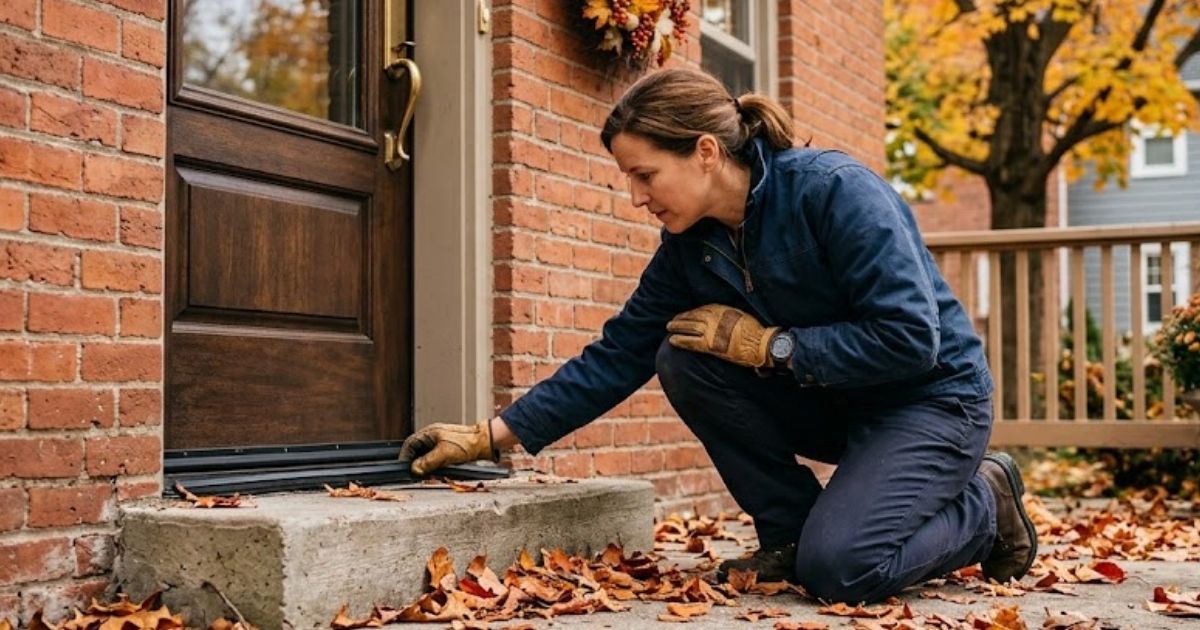
- Door bottom sweeps: Slide a piece of paper under every exterior door with the door closed. If it slides freely, the gap is large enough for a mouse.
- Weep holes in brick veneer: These intentional drainage holes are mouse-accessible and can be covered with copper mesh inserts without blocking drainage.
- Dryer vent cap: The damper flap should close completely when the dryer stops. A stuck-open cap is a common entry.
Interior: Cabinet Bases and Utility Areas
Check under and behind the kitchen sink for gaps around supply and drain lines, behind the refrigerator and dishwasher at the water line entry, and in the utility room at pipe penetrations and HVAC connections.
When to Call a Professional
Self-inspection is a reasonable starting point, but professional assessment adds value when: active evidence of infestation exists (fresh droppings, odor, gnaw marks), the property has a complex roofline requiring ladder work, historic properties need non-invasive methods, or a previous self-inspection missed an entry that led to recurrence.
Schedule a Pre-Winter Inspection
Professional entry-point assessment with written report. Same-day availability across Richmond County.
📞 Call (844) 635-0403Month-by-Month Pre-Winter Preparation Schedule
The timing matters because Augusta's fall rodent migration peak runs September through November, and preparation done before the peak is materially different from preparation done during or after. The schedule below works for Augusta homeowners doing DIY work or coordinating with professional service.
| Month | Action | Reasoning |
|---|---|---|
| August | Comprehensive exterior inspection | Identifies issues with full lead time to address before peak. Daylight still permits afternoon work; attic temperatures dropping from July peak. |
| Early September | Address identified issues | Repairs or exclusion work happens before migration begins. Window closes mid-month. |
| Late September | Verification walkthrough | Confirms previous work held; catches any new issues from August storms or summer activity. |
| October | Active monitoring | Migration peak underway. Catch early signs of activity before colony establishes. |
| November | Response to any detected activity | Quick response to early-stage activity prevents established colony development through winter. |
| December | Indoor monitoring | Outdoor activity slows; established interior colonies become detectable through sound/sign. |
For Augusta homeowners working backward from peak season — meaning they're starting in October or November rather than August — the realistic plan shifts toward reactive monitoring rather than preventive exclusion. Active treatment of any detected activity becomes the priority; comprehensive exclusion is postponed to the off-season (May-July) when scheduling pressure is lower and the work can be done without competing against active infestations.
What Pre-Winter Exclusion Actually Prevents
Effective pre-winter exclusion prevents the year-long cascade that develops when rodents establish indoor presence during fall migration. The cascade looks like this: October entry of a breeding pair → November-December nesting and first litter → January-February colony expansion → March population reaches 15-25 mice or 5-10 rats → April-May spring breeding compounds the population. By summer, the property has a full infestation that began as a preventable October entry event.
Pre-winter exclusion intercepts the cascade at step one. The cost differential is significant: $300-1,500 for fall preventive work versus $700-2,800 for spring colony removal plus the cleanup costs of established activity. The numbers favor prevention.
The exclusion work itself focuses on the entry points migration-pressure rodents actually use. Foundation gaps in older Augusta homes (Harrisburg, Olde Town, Sand Hills); roofline penetrations in canopy neighborhoods (Summerville, Forest Hills); garage interfaces in newer construction (Martinez, Evans). The specific entry-point inventory varies by property; the timing is consistent across all of them. Professional exclusion in August-September produces the durable result; the same work in December produces marginal benefit because the migration has already happened.
Why Some Augusta Properties Need More Than Pre-Winter Prep
For Augusta properties facing chronic outdoor pressure — adjacent commercial corridors, vacant neighboring properties, rural-edge agricultural conditions — pre-winter exclusion alone isn't enough. The outdoor population conditions don't pause during winter; they continue at reduced intensity. Without ongoing perimeter monitoring, the structural exclusion that holds through one fall migration may face compromised exterior conditions by the next spring breeding season.
The realistic plan for chronic-pressure properties combines pre-winter exclusion (the structural foundation), spring perimeter inspection (catching post-winter damage), and ongoing quarterly monitoring through bait station programs. The combined approach produces durable results that match the conditions; one-time exclusion alone often doesn't.
For Augusta homeowners new to the area or new to professional pest service, the first pre-winter inspection establishes documented baseline conditions that future seasonal visits can compare against. The baseline catches change accurately rather than relying on memory or general impressions. Documented baselines support long-term property management and prevent the gradual development of conditions that don't get noticed until they become acute.