Emergency Rat Removal in Augusta: When to Call Right Now
Most rodent situations in Augusta are urgent but not emergencies — they require prompt professional attention within days, not hours. But some situations are genuine emergencies that warrant calling at any hour and pushing for same-day response. Understanding which category your situation falls into helps you make the right call.
Situations That Require You to Call Right Now
Active rat or mouse sighting in a commercial food-service area during operating hours. A rodent visible in a restaurant kitchen or dining room during business hours is a health code incident in progress. Stop food preparation in the affected area, document the sighting with timestamps and a photograph, and call immediately.
A health inspection rodent violation with a re-inspection date pending. You have a fixed deadline. Call now, tell us the re-inspection date, and we will prioritize your scheduling accordingly.
Active sighting in a property currently occupied by short-term rental guests. A Masters Week guest texting about a rodent sighting is an emergency for your rental business. Respond to the guest immediately, call us for same-day dispatch, and document the professional response.
Dead-rodent odor in a commercial kitchen or food-service area. A decomposing rodent inside a wall or ceiling cavity in a food-service environment is a health code issue independent of any active infestation. The odor source needs to be extracted and the area sanitized before food service continues.
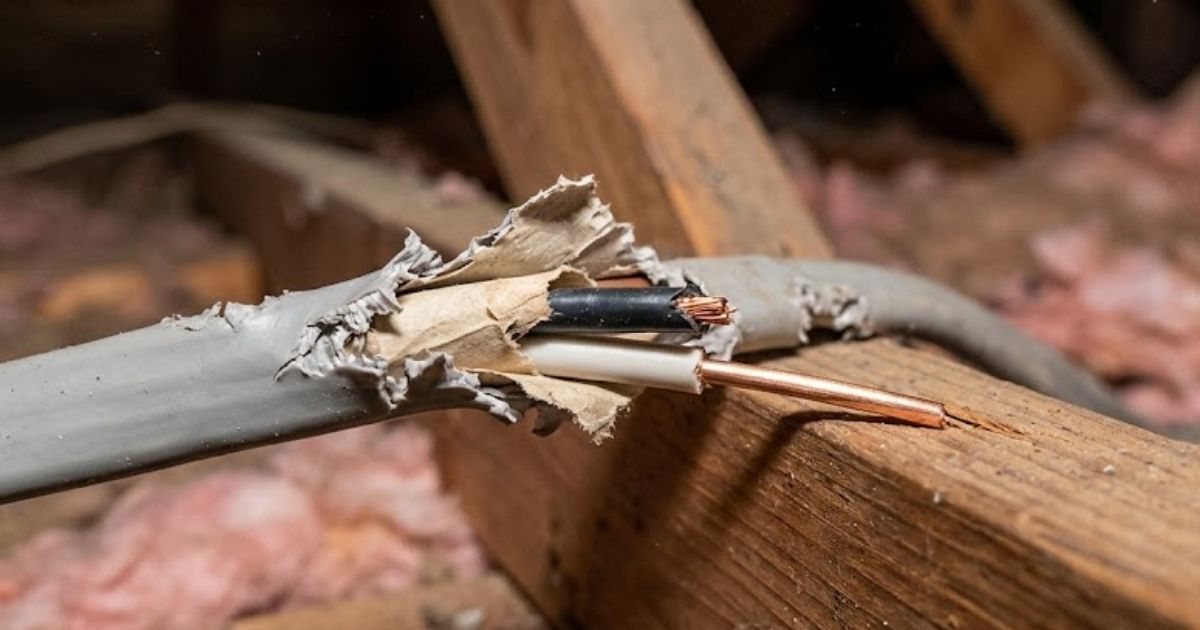
Visible gnawed wiring in an attic or wall cavity. This is an electrical hazard — call us for same-day assessment and documentation, and call an electrician the same day.
A rodent sighting by a household member with a compromised immune system or respiratory condition. The population at risk for hantavirus or leptospirosis complications is specifically people with compromised immunity. Rapid professional removal with hantavirus-safe protocol is the appropriate immediate response.
Situations That Are Urgent but Not Emergencies
Scratching in the ceiling at night. Distressing, but not an immediate health or safety emergency. Call in the morning for same-day inspection — you do not need to call at 3 AM for nocturnal scratching that has been going on for a week.
Finding droppings in a kitchen cabinet. Discard affected food immediately, do not disturb droppings without gloves, and call in the morning for same-day inspection. Urgent; not a 3 AM call unless the evidence is extensive.
What to Do While You Wait
For food-service situations: stop food preparation in the affected area, move unsealed food out of the affected zone, document everything with timestamps and photographs. For rental guests: acknowledge the complaint in writing and avoid making specific timeline promises until you have confirmed dispatch time. For any residential situation: do not attempt to seal entry points before inspection, do not disturb nesting material without PPE.
24/7 Emergency Dispatch — Richmond County and CSRA
Commercial food-service emergencies, rental guest situations, health inspection failures. Call now.
📞 Call (844) 635-0403Triage Framework: Is It Actually an Emergency?
"Emergency" gets used loosely in pest-control marketing, and there's a real cost to either over- or under-classifying a situation. Pay emergency rates for a problem that could wait until Monday and you've overspent. Wait until Monday when the situation actually required same-day response and you've allowed health, structural, or business-disruption risk to grow. The table below is the framework we use to triage incoming calls.
| Situation | Classification | Response Window |
|---|---|---|
| Live rodent visible inside food-handling business during operating hours | EMERGENCY | Same-day, often within 2 hours |
| Rodent in hospital, clinic, daycare, or eldercare facility | EMERGENCY | Same-day, regulatory exposure |
| Live rodent trapped inside living space with children or immunocompromised residents | EMERGENCY | Same-day |
| Strong dead-rodent odor in occupied living/office space | URGENT | Same-day or next-day |
| Confirmed activity in vacation rental with guest arrival within 48 hours | URGENT | Same-day |
| Activity discovered in normally-occupied home, no immediate health concern | STANDARD | Schedule within 2-5 business days |
| Droppings or signs of historic activity, no current sightings | STANDARD | Schedule inspection within a week |
| Outdoor sighting, no structural concern | NON-URGENT | Schedule at convenience; may not require treatment |
What Same-Day Response Actually Means in Augusta
Same-day rat removal isn't a single service — it's a scheduling commitment around a standard service. The underlying work (inspection, trapping, sealing) is the same as a scheduled appointment; what changes is the response window. Understanding what "same-day" actually means matters for setting realistic expectations.
A morning call (before 11am) almost always books a same-day window in the afternoon for Richmond County addresses. Calls between 11am and 2pm typically book a late-afternoon or early-evening slot. Calls after 2pm sometimes route to next-morning first availability — not because the day is full, but because arriving at 6pm with daylight running out limits what can actually be accomplished on-site.
Distance from Augusta dispatch affects timing too. Aiken, Martinez, and Evans book same-day reliably during business hours. Further-out areas like Waynesboro or Edgefield often require earlier-in-the-day calls to fit a same-day window cleanly.
What same-day cannot do: complete a comprehensive multi-day exclusion project in one visit. Same-day work resolves the immediate situation — active trapping, immediate harborage interruption, initial entry-point assessment — and sets the schedule for any follow-up exclusion work needed within the same week. Same-day rat removal and emergency rodent removal address the urgent component; comprehensive structural work follows on a scheduled basis.
What Acting Quickly Actually Prevents
The cost differential between rapid-response and delayed-response treatment isn't just about preventing infestation expansion — it's about preventing the cascade of secondary issues that develop alongside untreated rodent activity. Wire damage, insulation contamination, secondary pest infestations (flies, dermestid beetles drawn to rodent waste), HVAC system contamination — all develop in parallel with rodent population growth. Quick response intercepts the cascade at the beginning rather than mid-stream.
Health and Safety Considerations During Emergency Response
For Augusta homeowners with active rodent activity in occupied living space, immediate steps before our arrival include isolating the affected area (close doors to rooms with confirmed activity), securing food and water sources, and documenting visible evidence with timestamped photos for either insurance or sale-related purposes. These precautions don't replace professional response — they preserve the situation in a manageable state until professional help arrives.
Insurance and Documentation During Emergencies
For Augusta restaurant and business emergencies that involve potential health code or insurance implications, documentation during the response window matters as much as the treatment itself. Time-stamped photos of activity, dated response records, and chain-of-custody documentation for any contaminated materials all factor into post-event reporting. Our service records during emergency response are formatted to support whatever regulatory or insurance proceedings follow.
For residential emergencies, the documentation matters for insurance claims relating to secondary damage (fire from chewed wiring, water damage from chewed plumbing) and for any property-condition disclosure that follows. Documentation isn't the priority during active emergency response — but having professionally documented records afterward supports homeowner positions in subsequent processes.